Romans 4:1–12 – Abraham Justified by Faith, Not Works
Romans 4:1–12 – Abraham Justified by Faith, Not Works Abraham was declared righteous by faith before circumcision (Romans 4:3), proving that justification comes by grace through faith apart from works or religious rituals. If Romans 3 is the declaration of justification by faith, Romans 4 is the demonstration. The question is no longer “What is […]
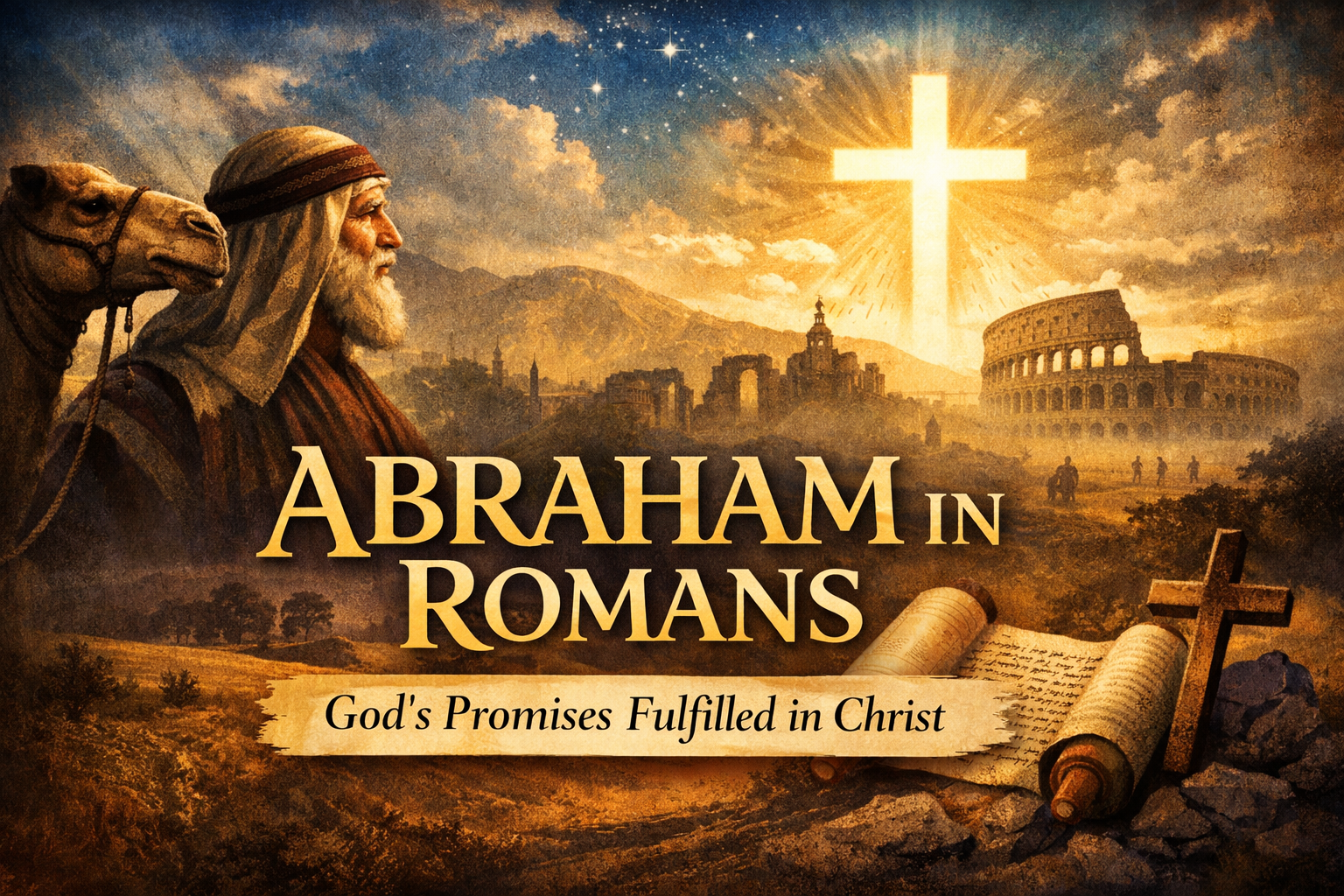
Abraham was declared righteous by faith before circumcision (Romans 4:3), proving that justification comes by grace through faith apart from works or religious rituals.
If Romans 3 is the declaration of justification by faith, Romans 4 is the demonstration.
The question is no longer “What is the gospel?” but “Has it always been this way?”
To answer that, Paul takes us back—not to Moses, not to the law—but to a man every Jew revered and every believer must understand: Abraham.
The Test Case of Abraham (Romans 4:1–3)
Romans 4:1–3 (ESV)
“What then shall we say was gained by Abraham, our forefather according to the flesh? For if Abraham was justified by works, he has something to boast about, but not before God. For what does the ScriptureScripture say? “Abraham believed God, and it was counted to him as righteousness.”
Paul brings forward Abraham as the ultimate test case.
If anyone could claim righteousness by works, surely it would be Abraham. Yet Scripture makes it unmistakably clear:
He was not justified by what he did—but by what he believed.
The word “counted” (or credited) is a financial term. It means something was placed into Abraham’s account that he did not earn.
Grace Versus Wages (Romans 4:4–5)
Romans 4:4–5 (ESV)
“Now to the one who works, his wages are not counted as a gift but as his due. And to the one who does not work but believes in him who justifies the ungodly, his faith is counted as righteousness,”
Paul contrasts two completely different systems:
- Wages – earned, deserved, owed
- Gift – freely given, undeserved, gracious
If salvation were based on works, God would owe us something. But Scripture declares the opposite:
God justifies the ungodly.
This is one of the most shocking and beautiful statements in the Bible. God does not justify the worthy—He justifies sinners who believe.
David Confirms the Same Gospel (Romans 4:6–8)
Romans 4:6–8 (ESV)
“just as David also speaks of the blessing of the one to whom God counts righteousness apart from works: ‘Blessed are those whose lawless deeds are forgiven, and whose sins are covered; blessed is the man against whom the Lord will not count his sin.’”
Paul now brings in David—Israel’s greatest king—to confirm the same truth.
Quoting Psalm 32, David describes the joy of:
- Sins forgiven
- Sins covered
- Sins not counted
This is justification in its fullness:
God removes our sin and replaces it with righteousness.
Before Circumcision—Before Religion (Romans 4:9–10)
Romans 4:9–10 (ESV)
“Is this blessing then only for the circumcised, or also for the uncircumcised? … It was counted to him before he was circumcised.”
Paul now dismantles a deeply held assumption.
Many believed righteousness came through covenant identity—through circumcision. But Paul points to the timeline:
Abraham was declared righteous before he was circumcised.
This means righteousness is not tied to ritual, tradition, or outward identity.
It is tied to faith alone.
Circumcision as a Seal, Not a Source (Romans 4:11–12)
Romans 4:11–12 (ESV)
“He received the sign of circumcision as a seal of the righteousness that he had by faith while he was still uncircumcised…”
Circumcision was never the cause of Abraham’s righteousness—it was the confirmation of it.
Paul calls it a sign and a seal:
- Sign – pointing to something already true
- Seal – confirming and authenticating it
This establishes a vital principle:
Outward expressions of faith follow inward transformation—they never create it.
Abraham becomes:
- The father of uncircumcised believers (Gentiles)
- The father of circumcised believers who walk by faith (true Israel)
The defining mark of God’s people is not ritual—it is faith.
Teaching Outline: “Faith Alone, From the Beginning”
1. A Righteousness Credited (v.1–3)
Abraham believed God, and it was counted to him as righteousness.
2. A Grace Distinguished (v.4–8)
Salvation is a gift, not wages—confirmed by both Abraham and David.
3. A Faith Confirmed (v.9–12)
Righteousness comes before and apart from religious ritual.
Reflection Questions
- Am I trusting in my works, or resting in the righteousness of Christ?
- Do I see salvation as a gift—or something I must earn or maintain?
- Are there outward expressions of faith I rely on more than inward trust in God?
- How does Abraham’s example challenge my understanding of grace?
- Continue in our Romans study – explore how faith secures the promise in chapter 4
- What Is the Gospel? – understanding justification by grace through faith
- How Do We Know the Bible Is the Word of God? – strengthening confidence in Scripture
Final Encouragement:
Abraham stood before God with empty hands—and was declared righteous.
Not because he worked. Not because he performed. But because he believed.
The same God who justified Abraham still justifies sinners today.
Come the same way Abraham did—by faith alone.