The Ice Age: A Creationist Perspective
Scripture, creation science, and the Book of Job reveal how the Ice Age fits the biblical timeline and affirms God’s Word after the Flood.
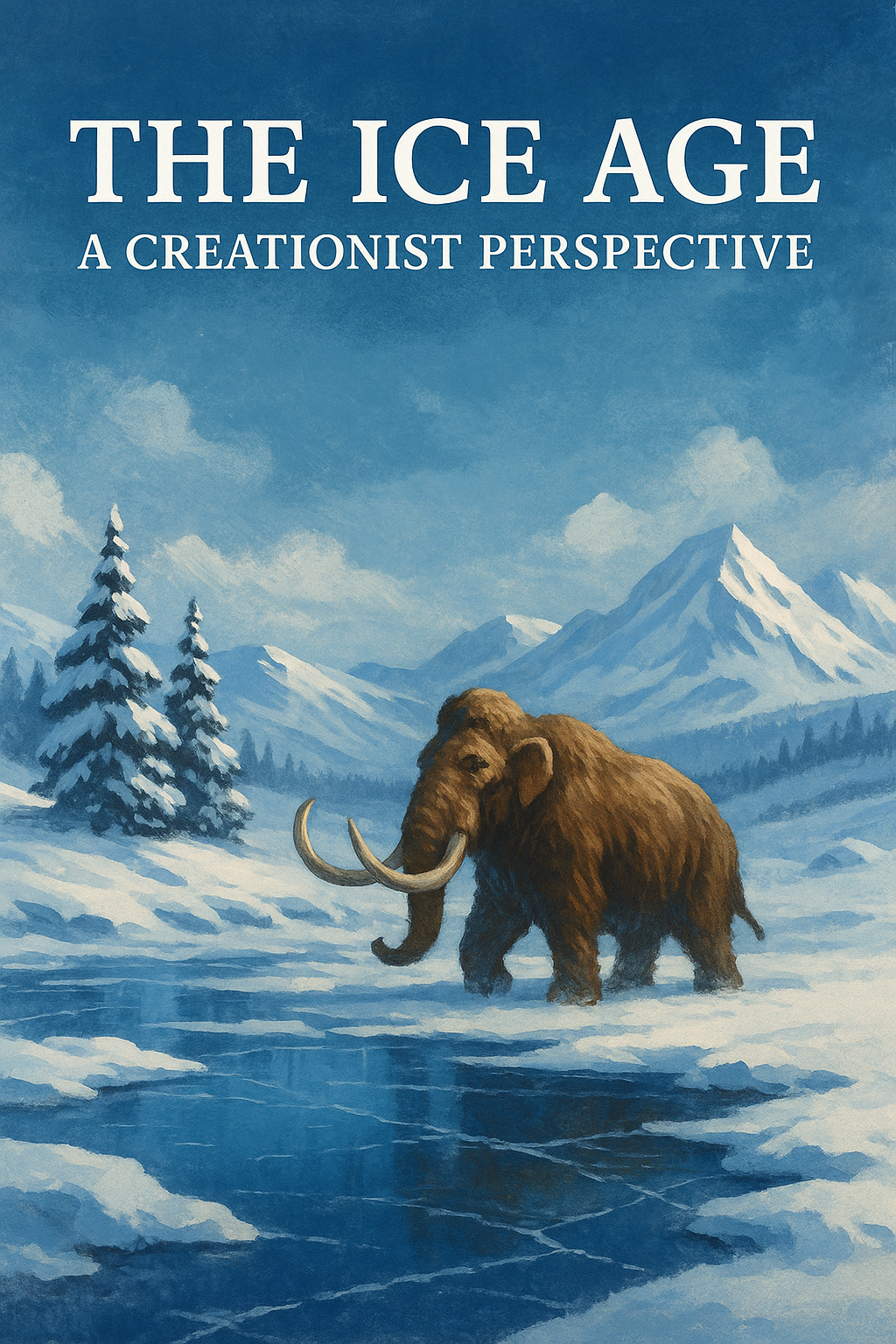
“He giveth snow like wool: he scattereth the hoarfrost like ashes. He casteth forth his ice like morsels: who can stand before his cold?”
— Psalm 147:16–17 (KJV)
📚 Lesson Overview
Theme: Understanding the Ice Age in light of the Bible and creation science
Objective: To demonstrate that the Ice Age fits naturally within the biblical timeline—specifically as a post-Flood event—and confirms the reliability of Scripture
Key Texts: Genesis 6–9; Job 37–38; Psalm 147; Psalm 148
Key Doctrine: The global Flood radically altered Earth’s climate, producing conditions for a rapid, singular Ice Age consistent with Scripture and observable science
The Ice Age is not a problem for the Bible—it is a witness to it.
🧊 1. What Is the Ice Age?
The Ice Age refers to a period in Earth’s history when massive ice sheets covered large portions of the continents, particularly in the Northern Hemisphere. Secular models propose multiple ice ages over hundreds of millions of years, driven by slow, uniform processes.
The biblical creation model, however, proposes one primary Ice Age, lasting several centuries, beginning shortly after the Genesis Flood.
This model explains:
- Extensive glaciation
- Rapid climate shifts
- Frozen animal remains
- Human migration patterns
—without appealing to deep time or evolutionary assumptions.
Key Point:
The Bible does not use the modern term Ice Age, but it clearly describes extreme cold, ice, snow, frozen waters, and climatic upheaval—especially in the Book of Job.
📖 2. Job: Eyewitness of the Ice Age?
Few people realize that Job contains more references to ice, snow, frost, hail, and cold than any other book of the Bible.
“By the breath of God ice is given, and the broad waters are frozen fast.”
— Job 37:10 (ESV)
“The waters are hid as with a stone, and the face of the deep is frozen.”
— Job 38:30 (KJV)
These are not poetic exaggerations—they describe sustained environmental conditions.
Discussion Consideration:
- Why would Job describe frozen waters and heavy snow if he lived in a normally arid region?
- Why does God repeatedly question Job about snow and ice if these were unfamiliar phenomena?
Insight:
Job likely lived shortly after the Flood, during a period when Earth’s climate was far colder and wetter than today. His descriptions make sense only in a post-Flood Ice Age environment.
🌊 3. What Caused the Ice Age?
The Genesis Flood was a global catastrophe that reshaped the planet (Genesis 7:19–20). Creation scientists identify several Flood-related mechanisms that naturally produced an Ice Age:
🌋 Flood After-Effects
1. Warm Oceans
Subterranean volcanic activity released immense heat, warming the oceans.
2. Cool Atmosphere
Volcanic ash and aerosols blocked sunlight, cooling the land.
3. Heavy Snowfall
Warm oceans increased evaporation; cool land caused intense snowfall that did not fully melt.
4. Ice Accumulation
Snow compacted into ice sheets, rapidly expanding glaciers.
Timeline Estimate:
Creation scientists estimate the Ice Age lasted 500–700 years, peaking a few centuries after the Flood.
🗓 4. When Did the Ice Age Occur?
Based on biblical chronology and geological evidence, the Ice Age likely occurred:
- Shortly after the Flood (about 4,300 years ago)
- During the time of Job, Abraham, and the Patriarchs
- Before later large-scale human settlement patterns
Job’s vivid language about snow, frost, frozen waters, and cold winds would have been normal experiences, not anomalies.
📜 5. Scripture Supporting an Ice Age
- Job 37:10 — Broad waters are frozen fast
- Job 38:22–23 — Storehouses of snow and hail
- Psalm 147:16–18 — Ice like morsels; God sends and removes cold
- Psalm 148:8 — Snow and storm fulfilling His word
- 2 Samuel 23:20 — Snow described as a seasonal reality
Theological Note:
Snow and ice are consistently presented as tools in God’s hand—not random forces.
🧬 6. Science and Scripture in Harmony
When science begins with God’s Word, the Ice Age makes sense.
The biblical model explains:
- Rapid glacial formation
- Frozen mammoths with undigested food
- Animal and human migration after Babel
- Sudden climate stabilization
Apologetics Insight:
The Ice Age supports a global Flood, a young Earth, a biblical timeline, and a sovereign Creator.
“Always be prepared to make a defense to anyone who asks you for a reason for the hope that is in you.”
— 1 Peter 3:15
💬 7. Discussion Questions
- Why does Job’s description of ice challenge evolutionary timelines?
- How does the Ice Age support the reliability of Genesis?
- Why does Scripture emphasize God’s control over climate?
- How can this topic help believers engage skeptics?
📌 8. Life Application
The God who sends snow, casts ice, and melts it by His word is the same God who governs history, judgment, and restoration.
- Climate is not autonomous—God reigns
- Scripture speaks accurately about the natural world
- God’s Word can be trusted from the beginning
🎯 Closing Challenge
“Have you entered the storehouses of the snow?” (Job 38:22)
Creation testifies to divine wisdom. Even in the coldest chapters of history, God was present, purposeful, and powerful.
🧭 Next Steps
- Study Genesis 6–9 alongside Job 37–38
- Explore creationist Ice Age research
- Prepare to defend the biblical timeline with humility
- Teach the next generation to trust Scripture from the first verse
God’s Word is true—from Eden to eternity—even through ice and flood.


